Approval of cookies
By clicking "Accept" , you agree that we store cookies on your device to analyze your website visit. See our privacy statement for more information.

NDAs and term sheets are short documents that often receive little attention. Nevertheless, they set the framework for the rest of the process, both legally and in terms of negotiations.
A non-disclosure agreement (NDA) is signed before a company shares sensitive information with a potential investor. It is binding, and its purpose is to limit both how the information is used and who has access to it. A good NDA regulates:
Some professional investors, particularly venture capital funds, are reluctant to sign NDAs at an early stage, and in some jurisdictions investors refuse to sign NDAs at all. The rationale is often "trust us": the investor's reputation could be damaged if sensitive information is not treated confidentially.
Therefore, carefully consider what information can be shared, and at what point in the process.
A term sheet (or letter of intent/LOI) summarizes the most important terms before the parties spend time and money on due diligence and complete contract documentation. As a general rule, a term sheet is not binding, but some provisions are. These typically concern exclusivity, confidentiality, costs and choice of law.
According to Norwegian law, whether a point in a term sheet is binding is determined by a specific interpretation and not by the title of the document. Therefore, write explicitly which provisions are binding on the parties.
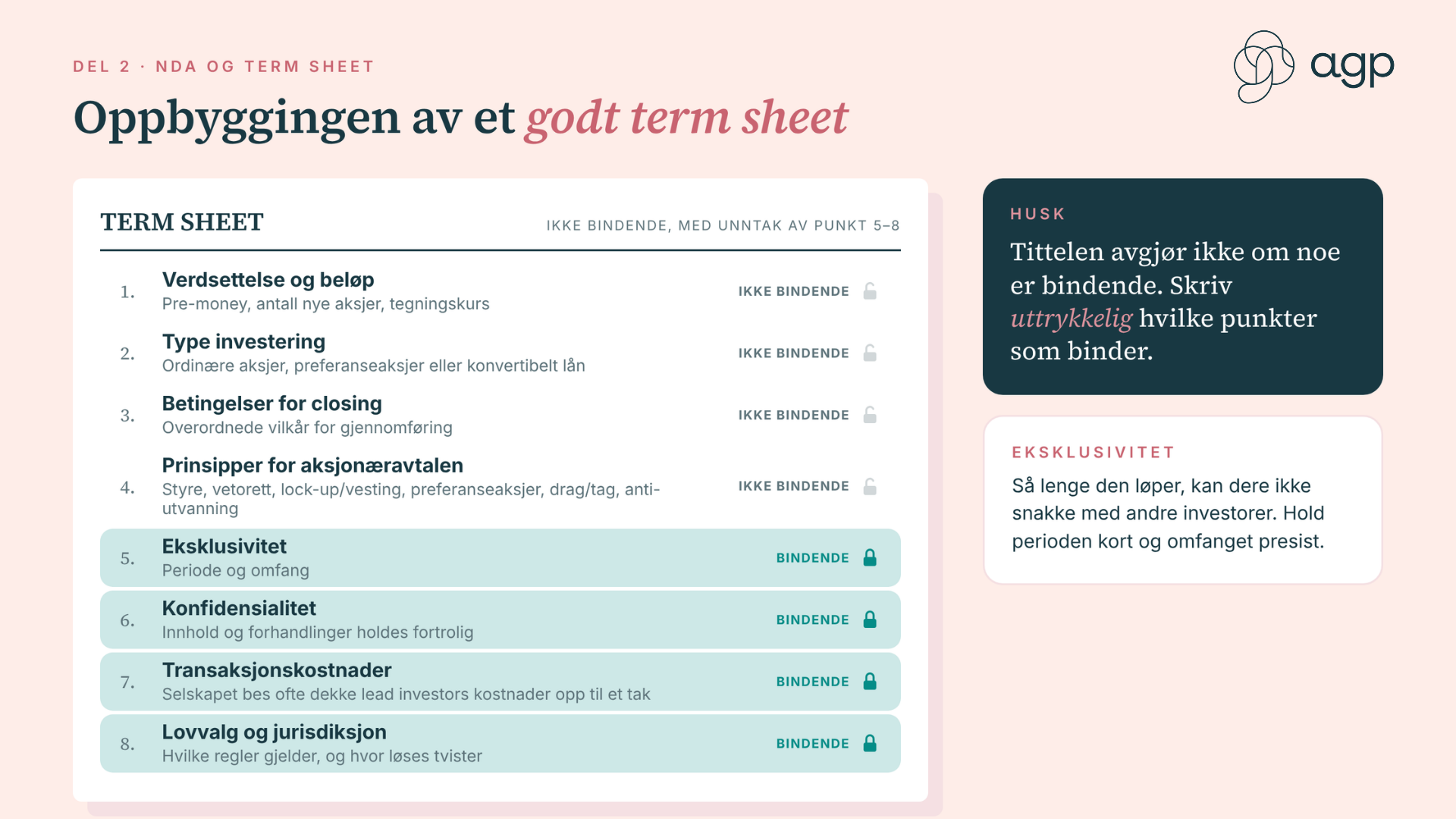
Please also make sure to include a timetable, including expected times for due diligence, signing and closing.
While the exclusivity is in effect, the company cannot negotiate with other investors. If the process drags on, this may weaken the negotiating position. Therefore, agree on a short and clearly defined period, and specify what the exclusivity covers. Also consider agreeing that it will lapse if the investor proposes significant changes to the terms, or include an obligation for the investor to confirm continued interest at regular intervals and the lapse of exclusivity if such confirmation is not given.
Principles not agreed in the term sheet must be negotiated later in the process, when the company often has less time and the investor has more information. This applies in particular to the principles of the shareholder agreement, to which all shareholders, including entrepreneurs and their holding companies, must be parties. The more precise the term sheet is, the fewer surprises there will be in the negotiations on the investment agreement and the shareholder agreement.
Next article: Due diligence.
The article provides general information and is not legal advice.
AGP assists companies, founders and investors throughout the process. Contact us for an informal conversation, tips and advice.


